Emergency services
For immediate danger or a life-threatening emergency.
 Annika GubischPrivatpraxis · Psychotherapie
The practice is not an emergency service. Call 112 if there is immediate danger.
For immediate danger or a life-threatening emergency.
Mental health crises · calls from within Bavaria.
Day and night · every day
Psychiatric emergency · routing through hospital reception.
Day and night · every day
Confidential and free · German-speaking service.
Day and night · every day
Non-life-threatening medical concerns and appointment assistance. Telephone service in German.
Mon–Sat 14:00–20:00
Mon, Wed, Fri 09:00–17:00 · Tue, Thu 09:00–19:00
Office contact for registration and private outpatient appointments.
Mon–Fri 08:00–12:00 and 12:45–16:00
Psychotherapy
You do not need to put a label on your concerns before getting in touch. We can explore what needs support and whether this practice is a suitable fit.
Therapy in German and English

A personal perspective
Feelings, school, family or daily life may raise different questions. Annika Gubisch begins with the individual circumstances and the young person’s perspective when considering how to work together.

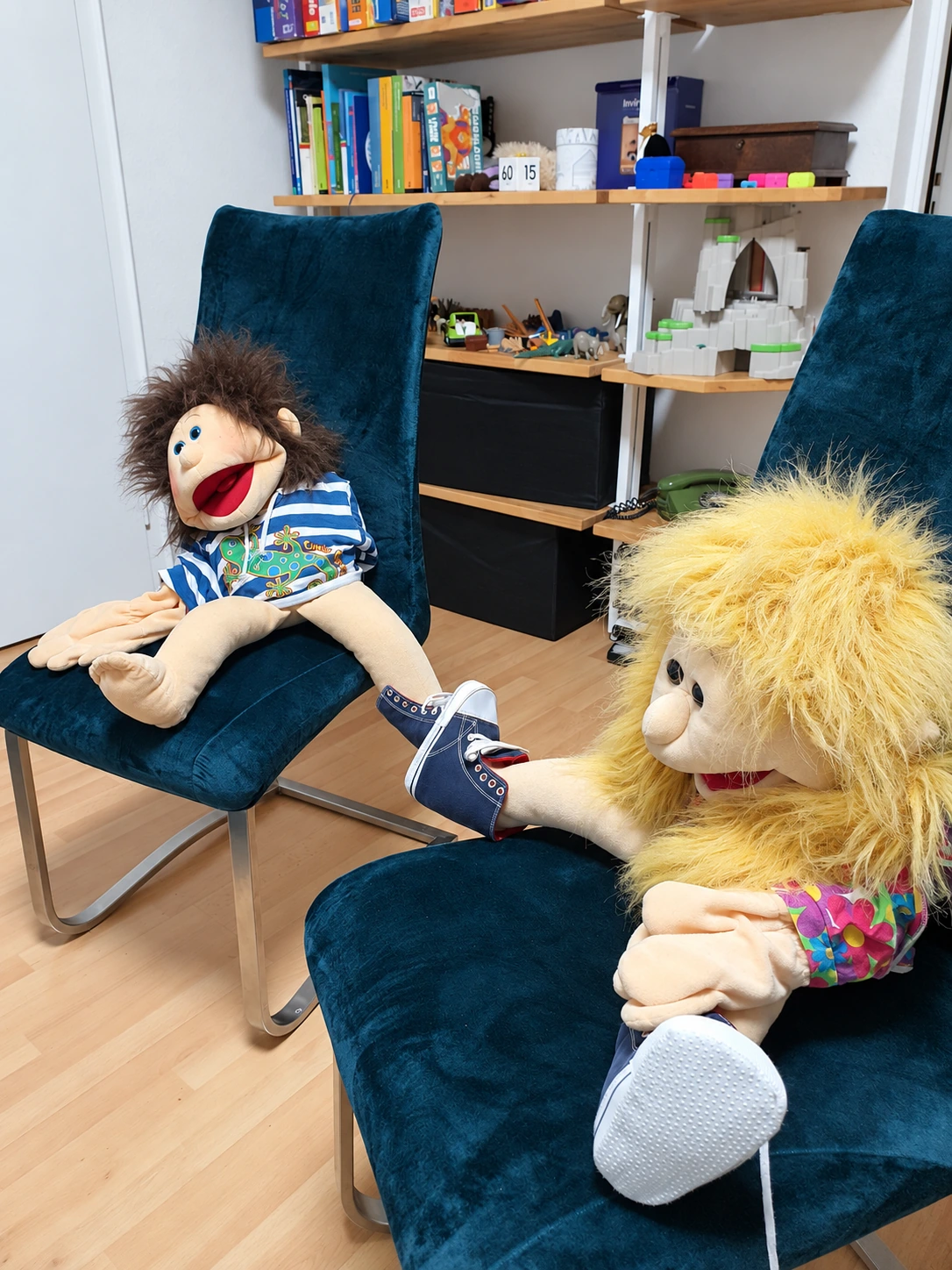
Children express feelings in different ways. Play, creative materials and understandable conversations can offer a way to begin. Annika Gubisch adapts the approach and authorised caregiver involvement to age and concerns.
Resources on this topic · Children
Your own perspective matters: what concerns you, what would you like to change, and what is already going well? Annika Gubisch agrees the collaboration individually. Caregiver involvement considers the different circumstances of minors and adults.
Resources on this topic · Teenagers & parents
You bring important observations from daily life. Annika Gubisch discusses which joint or separate conversations may be useful and how support could look. Involvement is agreed around individual circumstances.
Resources on this topic · Parents & caregiversCognitive behavioural therapy
Thoughts, feelings and behaviour influence one another. Cognitive behavioural therapy explores these everyday connections, including difficulties, strengths, helpful experiences and personal goals.
What is difficult, when does it happen, and what already helps? Annika Gubisch develops a professional assessment through personal conversation.
Goals and next steps are discussed clearly and shaped around the concerns and daily life. The role of caregivers is also agreed.
Agreed steps or small exercises may be tried between conversations. Those experiences are considered together, and the approach can be adjusted when needed.
What may need support
Your concerns do not need a precise label before the first contact. These examples offer orientation; individual professional assessment follows through conversation.
Worries can affect school, relationships or daily life. Together, you explore difficult situations, the thoughts and feelings involved, and appropriate next steps.
Make a first enquiryAttention or impulses can make daily life demanding. Annika Gubisch considers individual difficulties, strengths and questions from school or family to clarify next steps.
Resources on this topic · Attention & ADHDMake a first enquiryLow mood, withdrawal or self-doubt can be reasons to begin a conversation. The young person’s experiences are considered to clarify appropriate goals and support.
Make a first enquiryRecurring thoughts or actions can take time and energy. Conversation helps clarify how daily life is affected and which therapeutic setting may be suitable.
Make a first enquiryAfter difficult experiences, the focus is on the current situation and what needs support. How to discuss this and which steps may fit are agreed personally.
Make a first enquiryDifficulties around eating and body image, including eating disorders, need professional assessment. Annika Gubisch considers the appropriate treatment setting and any further support with you.
Resources on this topic · Anorexia & eating disordersMake a first enquiryTransitions, conflicts or developmental questions may concern families. Annika Gubisch considers the individual situation, appropriate caregiver involvement and support that may suit the young person.
Resources on this topic · Parents & caregiversMake a first enquiryStep by step
Begin with a question. Personal conversation clarifies whether the approach and practical arrangements fit your circumstances.
You do not need a referral from a doctor and can contact the practice directly. Contact the practice by email or telephone. Your name, contact details and a short question are enough to begin. Agree a transfer route for confidential documents personally.
Annika Gubisch begins by asking about the young person’s goals. You then consider what has already been tried, its results and changes since the enquiry. Together, you agree suitable next steps and discuss caregiver involvement individually.
Goals, appointments, costs and collaboration are agreed. A regular session usually lasts about 45 minutes; frequency and overall duration depend on individual circumstances. During a crisis, an agreed session may take longer.
View feesGood to know
No. You do not need a diagnosis or a referral from a doctor and can contact the practice directly. An initial question or request for guidance is enough. Professional assessment and possible next steps are discussed personally with Annika Gubisch.
Annika Gubisch explains current fees and terms. Ask your insurer, Beihilfe benefits office or statutory health insurer beforehand about your reimbursement conditions. Coverage depends on the funder’s individual decision.
View feesInvolvement is clarified individually, considering guardianship, decision-making capacity and applicable rules. Professional confidentiality may be limited by legal requirements or necessary safeguarding measures.
Annika Gubisch offers therapy in German and English. Mention your preferred conversation language at first contact. The French and Spanish website versions provide information.
Begin with what concerns you or what you would like to know. Annika Gubisch discusses personally whether working together would be appropriate and possible.